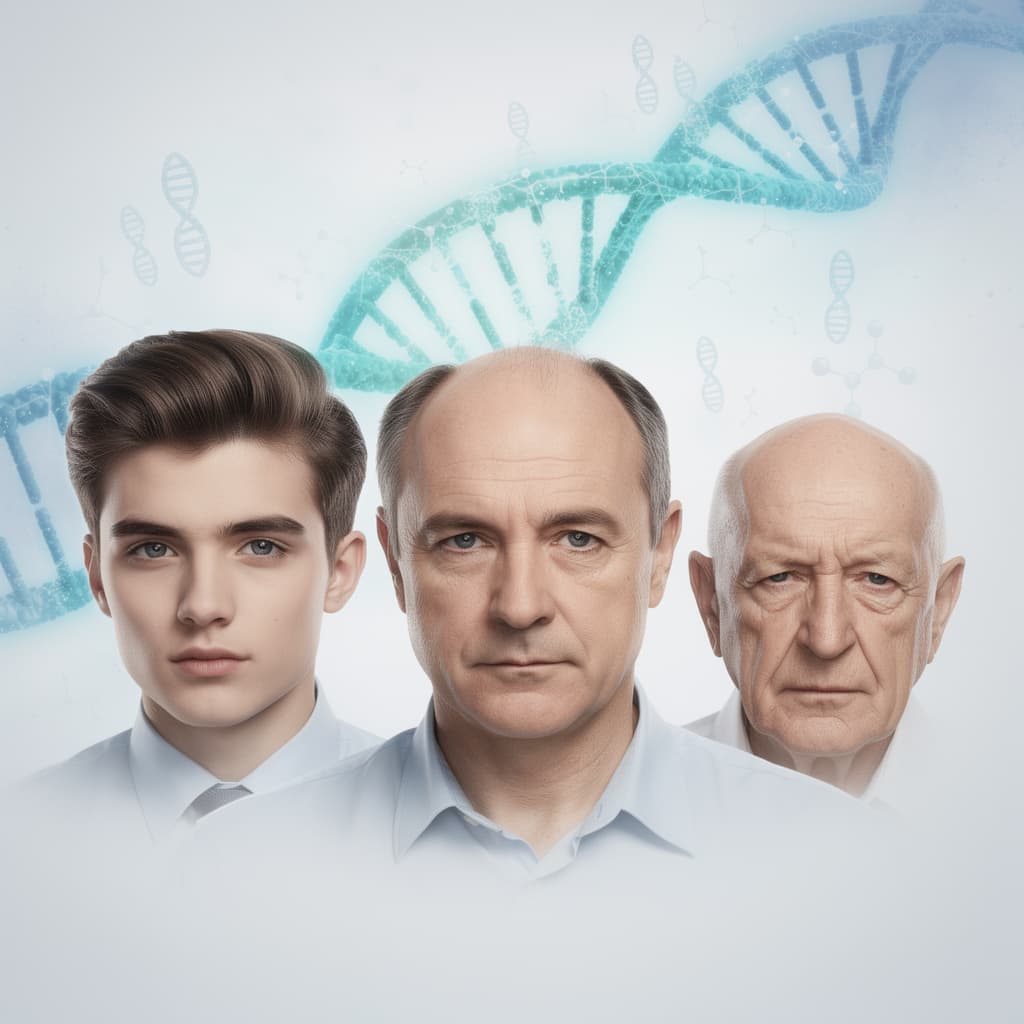
Hair loss affects millions of people worldwide, and genetics play a crucial role in determining who will experience it and to what extent. Understanding the genetic factors behind hair loss can help you make informed decisions about prevention and treatment. This guide explores how genetics influence hair loss and what you can do about it.
Understanding Genetic Hair Loss
Androgenetic alopecia (pattern hair loss) is the most common form of hair loss, affecting up to 80% of men and 50% of women.
It's caused by a combination of genetic predisposition and hormonal factors.
The condition is polygenic, meaning multiple genes contribute to its development.
Genetic hair loss can be inherited from either parent, though the pattern may differ.
The AR gene (androgen receptor gene) is strongly associated with male pattern baldness.
Onset and severity vary widely, even among family members with the same genetic predisposition.
How Genetics Influence Hair Loss
Genes determine your sensitivity to dihydrotestosterone (DHT), a hormone that shrinks hair follicles.
Genetic factors control the age at which hair loss begins and the rate of progression.
Hair follicle sensitivity to hormones is inherited and varies between individuals.
The pattern of hair loss (crown, temples, frontal) is also genetically determined.
Some genes affect hair texture, density, and growth cycle duration.
Genetic testing can identify predisposition but cannot predict exact outcomes.
Male Pattern Baldness (MPB)
Affects approximately 50% of men by age 50.
Typically begins with receding hairline and thinning at the crown.
Follows a predictable pattern (Norwood scale) in most cases.
Can begin as early as the late teens or early 20s.
Progression rate varies - some experience rapid loss, others gradual thinning.
Genetic factors from both maternal and paternal sides contribute.
Early intervention can slow or halt progression in many cases.
Female Pattern Hair Loss (FPHL)
Affects approximately 40% of women by age 50.
Typically presents as diffuse thinning, especially at the crown and part line.
Less predictable pattern than male pattern baldness.
Often begins during or after menopause but can start earlier.
Genetic factors are significant but hormonal changes also play a major role.
Hair loss is usually less severe than in men but can be more emotionally distressing.
Treatment options are similar but may need to be adjusted for women.
Other Genetic Hair Loss Conditions
Alopecia Areata: Autoimmune condition with genetic component, causing patchy hair loss.
Telogen Effluvium: Can have genetic predisposition, triggered by stress or illness.
Trichotillomania: Compulsive hair pulling, may have genetic and environmental factors.
Congenital hair loss conditions: Rare genetic disorders affecting hair from birth.
Some genetic conditions affect hair texture and make hair more prone to breakage.
Genetic testing can help identify specific conditions in some cases.
Can You Prevent Genetic Hair Loss?
While you cannot change your genetics, you can slow progression with early intervention.
Starting treatment early (before significant loss) yields better results.
Lifestyle factors (diet, stress, smoking) can accelerate genetic hair loss.
Proper hair care can minimize damage and breakage.
Avoiding harsh treatments and tight hairstyles helps preserve existing hair.
Regular scalp care and gentle handling can support hair health.
Professional treatments can be highly effective even with genetic predisposition.
Treatment Options for Genetic Hair Loss
Minoxidil: Topical treatment that can slow loss and promote regrowth. Effective for both men and women.
Finasteride: Oral medication (primarily for men) that blocks DHT production.
PRP (Platelet-Rich Plasma) Therapy: Uses growth factors to stimulate hair follicles.
Low-Level Laser Therapy (LLLT): Stimulates hair follicles through light energy.
Hair Transplant: Surgical option for permanent restoration in suitable candidates.
Mesotherapy: Injection of nutrients and medications to support hair growth.
Combination treatments often provide the best results.
Genetic Testing and Hair Loss
Genetic tests can identify predisposition to hair loss.
Tests look for variations in genes associated with androgen sensitivity.
Results can help predict likelihood but not guarantee hair loss will occur.
Testing can guide treatment decisions and timing.
Not all genetic tests are equally reliable - consult with a dermatologist.
Genetic predisposition doesn't mean hair loss is inevitable.
Early knowledge allows for proactive treatment planning.
Managing Expectations
Genetic hair loss cannot be completely prevented, but it can be managed.
Treatment results vary based on individual genetics and response.
Early intervention provides the best chance of maintaining hair.
Combination approaches typically yield better results than single treatments.
Realistic expectations are important - complete restoration may not be possible.
Maintenance treatments are usually necessary to sustain results.
Consultation with a dermatologist helps set realistic goals.
Genetics play a significant role in hair loss, but they don't determine your fate. Understanding your genetic predisposition can help you make informed decisions about prevention and treatment. Early intervention with appropriate treatments can significantly slow or even reverse hair loss in many cases. If you're concerned about genetic hair loss, consult with a dermatologist who can assess your situation and recommend the best treatment approach for your specific needs.
Dr. Sonu Radadiya
Director & Consultant Dermatologist
Expert dermatologist with years of experience in aesthetic and medical dermatology.