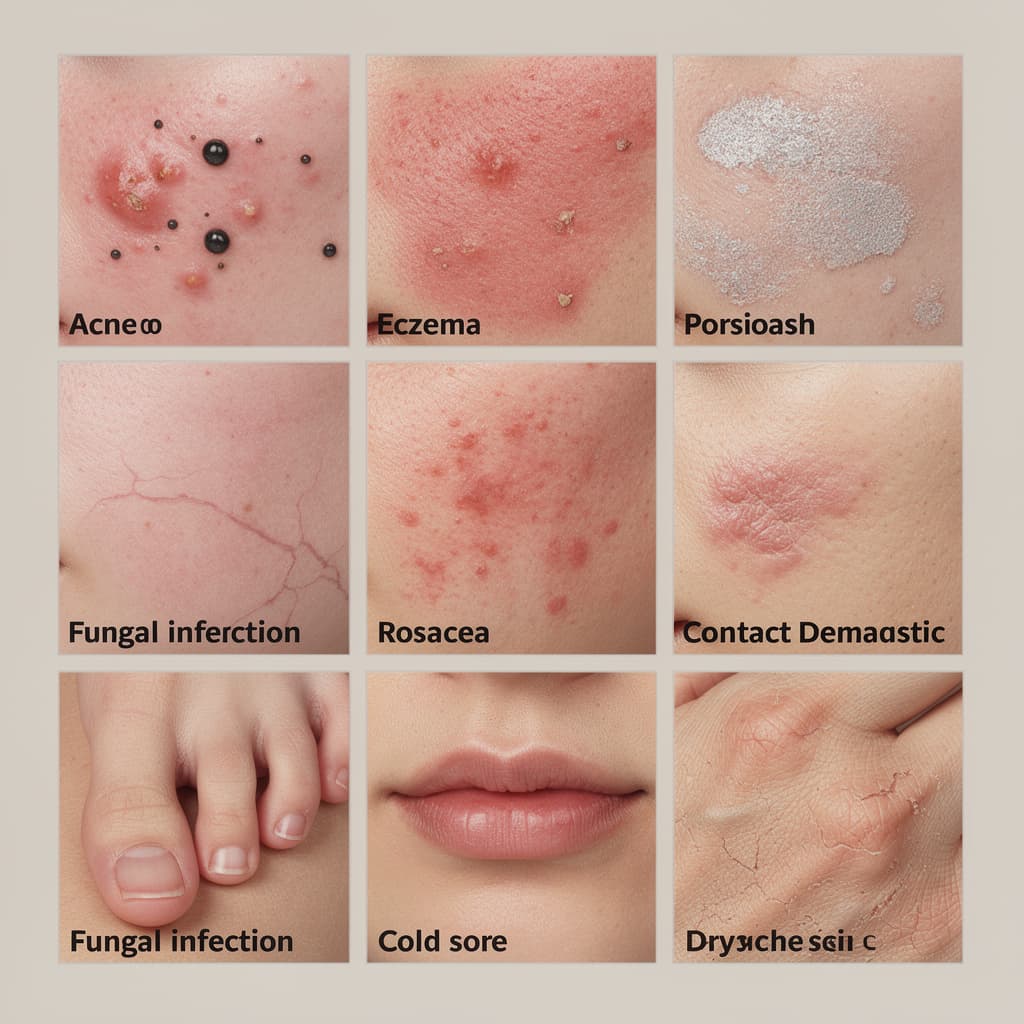
Skin conditions affect millions of people and can significantly impact quality of life. From acne to eczema, understanding common skin conditions and their treatments is essential for maintaining healthy skin. This comprehensive guide covers the most prevalent skin conditions and evidence-based treatment approaches.
Acne
Most common skin condition, affecting 85% of people at some point in life.
Caused by clogged pores, excess oil production, bacteria, and inflammation.
Types: Comedonal (blackheads/whiteheads), inflammatory (papules/pustules), and cystic acne.
Treatment: Topical retinoids, benzoyl peroxide, salicylic acid, antibiotics, or oral medications.
Professional treatments: Chemical peels, laser therapy, and extraction procedures.
Prevention: Gentle cleansing, non-comedogenic products, and avoiding picking.
Severe cases may require isotretinoin or hormonal therapy.
Eczema (Atopic Dermatitis)
Chronic inflammatory condition causing dry, itchy, and inflamed skin.
Common in children but can persist into adulthood.
Triggers include allergens, irritants, stress, and weather changes.
Treatment: Moisturizers, topical corticosteroids, calcineurin inhibitors, and antihistamines.
Lifestyle: Identify and avoid triggers, use gentle skincare products.
Severe cases may require oral medications or biologic therapies.
Regular moisturizing is crucial for managing symptoms.
Psoriasis
Autoimmune condition causing rapid skin cell turnover, leading to thick, scaly patches.
Common areas: Elbows, knees, scalp, and lower back.
Types include plaque, guttate, inverse, and pustular psoriasis.
Treatment: Topical corticosteroids, vitamin D analogs, retinoids, and light therapy.
Systemic treatments: Oral medications or biologics for moderate to severe cases.
Lifestyle: Stress management, avoiding triggers, and maintaining healthy weight.
Can be associated with psoriatic arthritis and other conditions.
Rosacea
Chronic condition causing facial redness, visible blood vessels, and sometimes bumps.
More common in fair-skinned individuals, typically begins after age 30.
Triggers include sun exposure, heat, spicy foods, alcohol, and stress.
Treatment: Topical metronidazole, azelaic acid, or oral antibiotics.
Laser therapy can reduce visible blood vessels and redness.
Skincare: Gentle products, sun protection, and avoiding triggers.
Subtypes include erythematotelangiectatic, papulopustular, phymatous, and ocular rosacea.
Dermatitis (Contact Dermatitis)
Inflammation caused by contact with irritants or allergens.
Irritant contact dermatitis: Caused by harsh chemicals or frequent exposure to irritants.
Allergic contact dermatitis: Immune response to specific allergens (nickel, fragrances, etc.).
Treatment: Identify and avoid the trigger, topical corticosteroids, and antihistamines.
Patch testing can help identify specific allergens.
Prevention: Use protective gloves, choose hypoallergenic products.
Symptoms usually resolve once the trigger is removed.
Seborrheic Dermatitis
Common condition causing scaly patches, red skin, and stubborn dandruff.
Affects oily areas: Scalp, face (especially around nose), and chest.
Associated with yeast (Malassezia) overgrowth and oil production.
Treatment: Antifungal shampoos, topical corticosteroids, and medicated creams.
Regular use of medicated shampoos helps control scalp symptoms.
May be chronic and require ongoing management.
Stress and weather changes can trigger flare-ups.
Vitiligo
Autoimmune condition causing loss of skin pigment, resulting in white patches.
Can affect any part of the body, including hair and eyes.
Treatment: Topical corticosteroids, calcineurin inhibitors, and light therapy.
Surgical options: Skin grafting or melanocyte transplantation for stable cases.
Cosmetic options: Makeup, self-tanners, or depigmentation for extensive cases.
Sun protection is crucial to prevent sunburn on depigmented areas.
Emotional support is important as it can significantly impact self-esteem.
Melasma
Hormonal condition causing brown or gray-brown patches, typically on the face.
Common in women, especially during pregnancy or with hormonal changes.
Triggered by sun exposure, hormones, and sometimes medications.
Treatment: Hydroquinone, retinoids, chemical peels, and laser therapy.
Strict sun protection is essential - use SPF 30+ daily.
May improve after pregnancy or hormonal changes.
Can be challenging to treat and may require combination approaches.
General Treatment Principles
Early diagnosis and treatment prevent complications and improve outcomes.
Follow treatment plans consistently for best results.
Use gentle, fragrance-free products suitable for your skin type.
Protect skin from sun damage with daily sunscreen use.
Identify and avoid known triggers when possible.
Maintain a healthy lifestyle: balanced diet, adequate sleep, stress management.
Regular follow-ups with a dermatologist ensure proper management.
Be patient - many skin conditions require time to improve.
Common skin conditions are treatable with proper diagnosis and management. While some conditions are chronic and require ongoing care, most can be effectively managed with appropriate treatment and lifestyle modifications. Early intervention and consistent treatment adherence are key to successful outcomes. If you're experiencing persistent skin issues, consult with a dermatologist for accurate diagnosis and a personalized treatment plan.
Dr. Sonu Radadiya
Director & Consultant Dermatologist
Expert dermatologist with years of experience in aesthetic and medical dermatology.