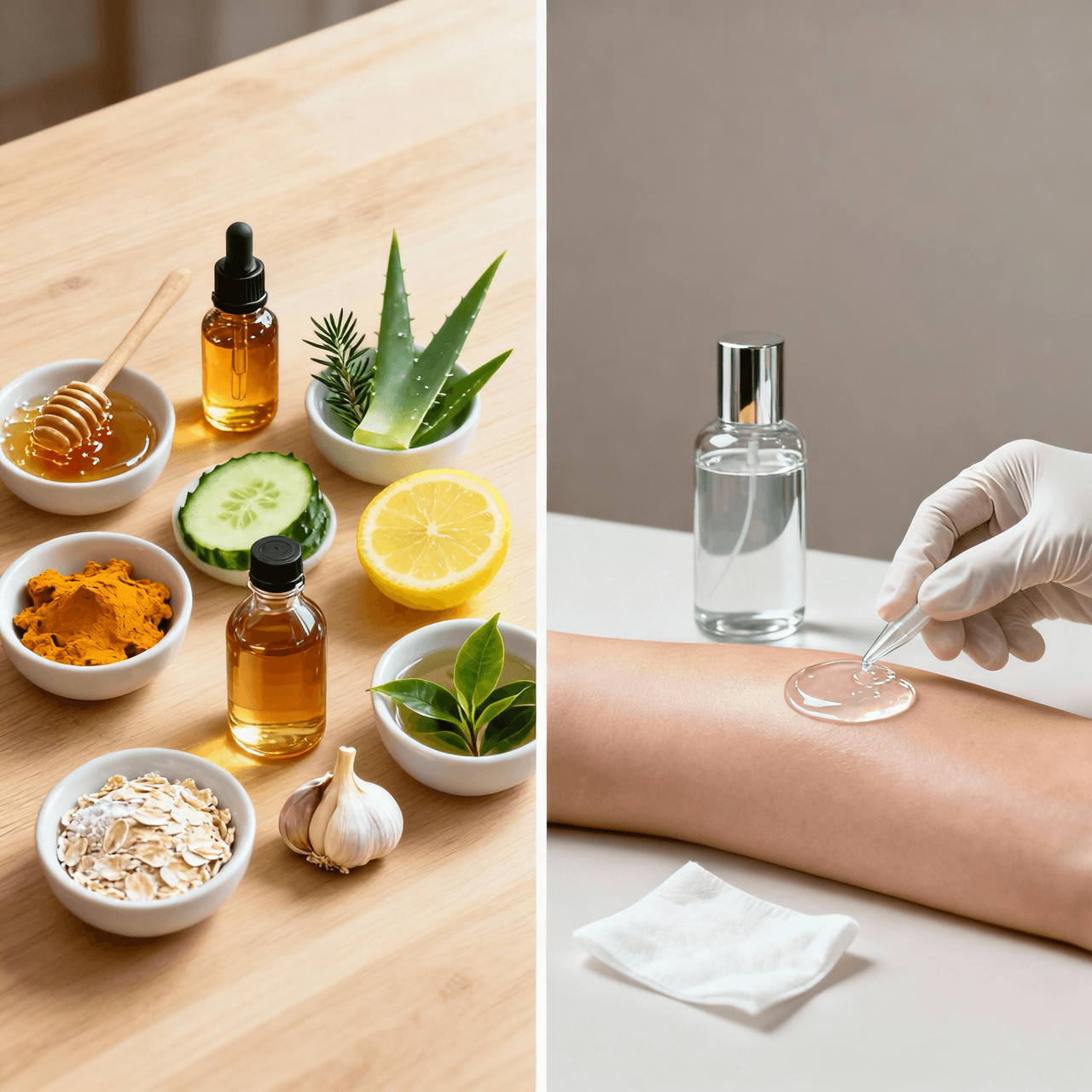
Acne is one of the most common skin conditions, affecting millions of people worldwide. While many turn to home remedies, professional treatments like chemical peels offer more effective and lasting solutions. This guide compares home cures with professional chemical peel treatments to help you make an informed decision.
10 Popular Home Cures for Acne
Tea Tree Oil: Has antimicrobial properties that can help reduce acne-causing bacteria. Dilute before use to avoid irritation.
Honey and Cinnamon Mask: Both have antibacterial properties, but results are limited and temporary.
Apple Cider Vinegar: Can help balance skin pH, but may cause irritation if not properly diluted.
Aloe Vera: Soothes inflammation and has mild antibacterial properties, but won't treat underlying causes.
Green Tea: Contains antioxidants and can reduce inflammation when applied topically.
Baking Soda: Can exfoliate but is too harsh and can damage the skin barrier.
Lemon Juice: Contains citric acid but can cause photosensitivity and irritation.
Turmeric: Has anti-inflammatory properties but can stain the skin.
Oatmeal: Can soothe irritated skin but provides minimal acne-fighting benefits.
Witch Hazel: Acts as an astringent but may be too drying for some skin types.
Limitations of Home Remedies
Home remedies typically provide temporary relief rather than addressing root causes.
Results are inconsistent and vary greatly between individuals.
Risk of skin irritation, allergic reactions, or worsening of acne.
No scientific evidence supporting long-term effectiveness for most home remedies.
Time-consuming preparation and application processes.
May delay seeking proper medical treatment, allowing acne to worsen.
Cannot treat severe or cystic acne effectively.
Chemical Peel for Acne: Professional Treatment
Chemical peels use acids (like salicylic, glycolic, or TCA) to exfoliate the skin and unclog pores.
They penetrate deeper than home remedies, targeting acne at its source.
Professional peels are customized based on your skin type and acne severity.
Performed under medical supervision, ensuring safety and optimal results.
Can treat multiple acne concerns simultaneously: active breakouts, scars, and pigmentation.
Results are more predictable and scientifically proven.
Types of Chemical Peels for Acne
Salicylic Acid Peels: Excellent for oily, acne-prone skin. Penetrates pores to clear blockages.
Glycolic Acid Peels: Effective for treating surface acne and improving skin texture.
Lactic Acid Peels: Gentler option suitable for sensitive skin with mild acne.
TCA (Trichloroacetic Acid) Peels: Medium-depth peels for more severe acne and scarring.
Combination Peels: Customized blends targeting multiple acne concerns.
Your dermatologist will recommend the best type based on your skin condition.
Chemical Peel Process
Pre-treatment consultation to assess your skin and determine the appropriate peel.
Skin preparation with specific products for 1-2 weeks before treatment.
The peel is applied to clean skin and left on for a controlled duration.
A neutralizing solution stops the chemical reaction.
Post-treatment care with gentle products and strict sun protection.
Multiple sessions (typically 4-6) spaced 2-4 weeks apart for optimal results.
Chemical Peel Benefits vs. Home Remedies
More effective: Chemical peels provide 70-90% improvement compared to 10-30% with home remedies.
Faster results: Visible improvement within weeks vs. months with home treatments.
Addresses root causes: Targets excess oil production, bacteria, and inflammation.
Treats scarring: Can improve acne scars, which home remedies cannot.
Professional supervision: Reduces risk of complications and ensures proper treatment.
Long-term results: With proper maintenance, results can last significantly longer.
Customized approach: Treatment is tailored to your specific skin needs.
When to Choose Professional Treatment
If home remedies haven't shown improvement after 4-6 weeks.
For moderate to severe acne that affects quality of life.
When dealing with cystic or inflammatory acne.
If you have acne scars or post-inflammatory hyperpigmentation.
When you want faster, more reliable results.
If you have sensitive skin that reacts poorly to home remedies.
For long-term acne management and prevention.
While home remedies may provide temporary relief for mild acne, professional chemical peel treatments offer more effective, faster, and longer-lasting results. For moderate to severe acne, or when home remedies fail, consulting with a dermatologist for a chemical peel treatment is the best approach. The investment in professional treatment often saves time, money, and prevents potential complications from ineffective home remedies.
Dr. Sonu Radadiya
Director & Consultant Dermatologist
Expert dermatologist with years of experience in aesthetic and medical dermatology.